
Last Year, several of the Walled Gardeners attended an event at the City Chambers celebrating 25 years of Edinburgh’s Biodiversity Action Plan. It was an enjoyable and inspiring evening, bringing together many of the Friends groups who care for the city’s parks and green spaces.
Among the many conversations that evening, one idea kept resurfacing: citizen science. We heard how effective it can be in involving large numbers of people in meaningful research, and how successful similar projects have been elsewhere in Edinburgh.
Back at the Walled Garden, those conversations continued. We began to explore the possibility of creating our own citizen science programme here in Granton, with a focus on moths and butterflies many of which are in decline due to habitat loss and climate change.
This felt especially relevant to us. Just beyond the garden walls, areas of urban wilderness that had provided shelter for wildlife have recently been cleared for housing. While the need for new homes is clear, the impact on local ecosystems is significant. Many species have lost important habitats, and their numbers are falling.
Moths and butterflies may be small, but their role is not. They are vital pollinators and an essential part of the wider food chain. Supporting them means supporting the health of the entire ecosystem.
The Walled Garden offers a unique opportunity to respond. Creating a sheltered microclimate, it is an ideal setting to explore how we can make conditions more favourable for these species. Enhancing biodiversity has always been one of our core aims, and through this project we hope to build on that. We want to grow more pollinator-friendly plants and encourage habitats where moths and butterflies can feed and breed.
We initially applied for funding to support the project, but were unsuccessful. By that point, however, there was a strong sense of momentum and shared enthusiasm, and we decided to move forward within our means.
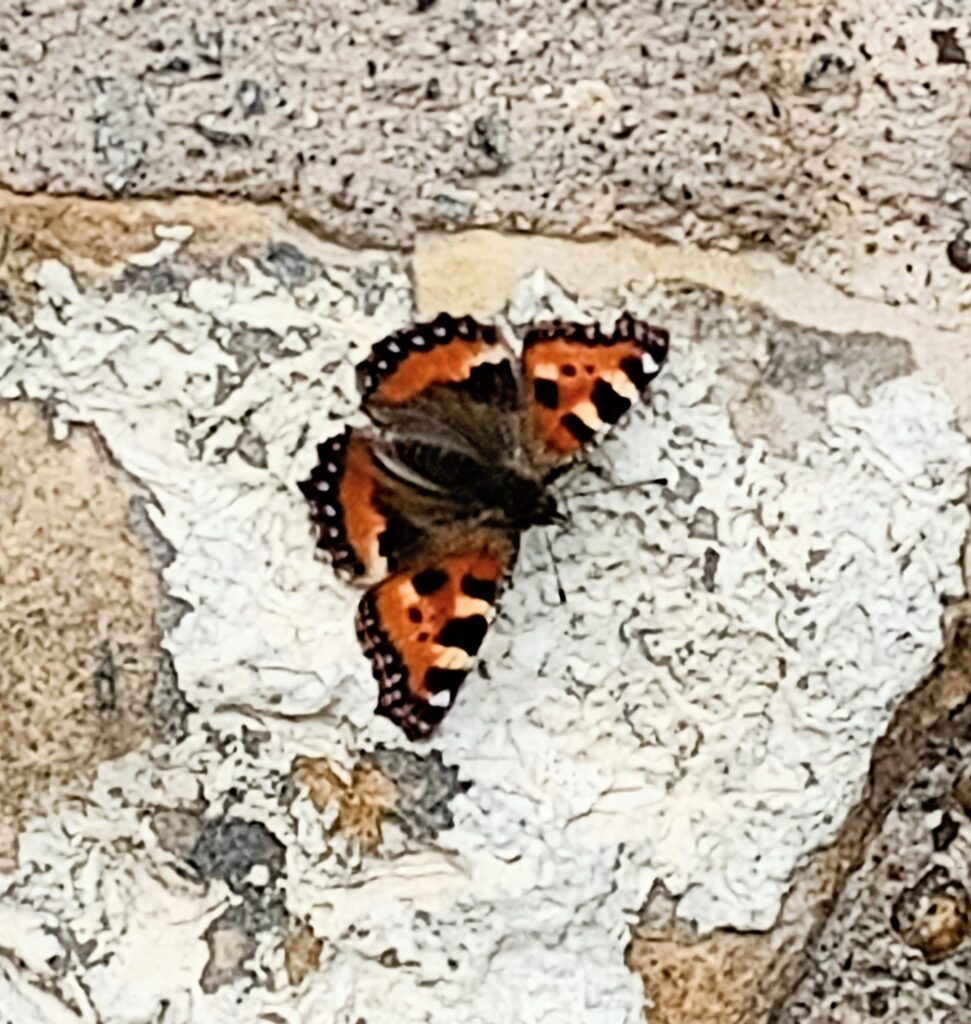
One of our volunteers suggested reaching out to Butterfly Conservation UK, and through this connection we were fortunate to welcome four experts from Edinburgh and Fife to the garden. Their visit, which took place on one of the first sunny days of spring, was both generous and encouraging. And we even spotted a few butterflies!
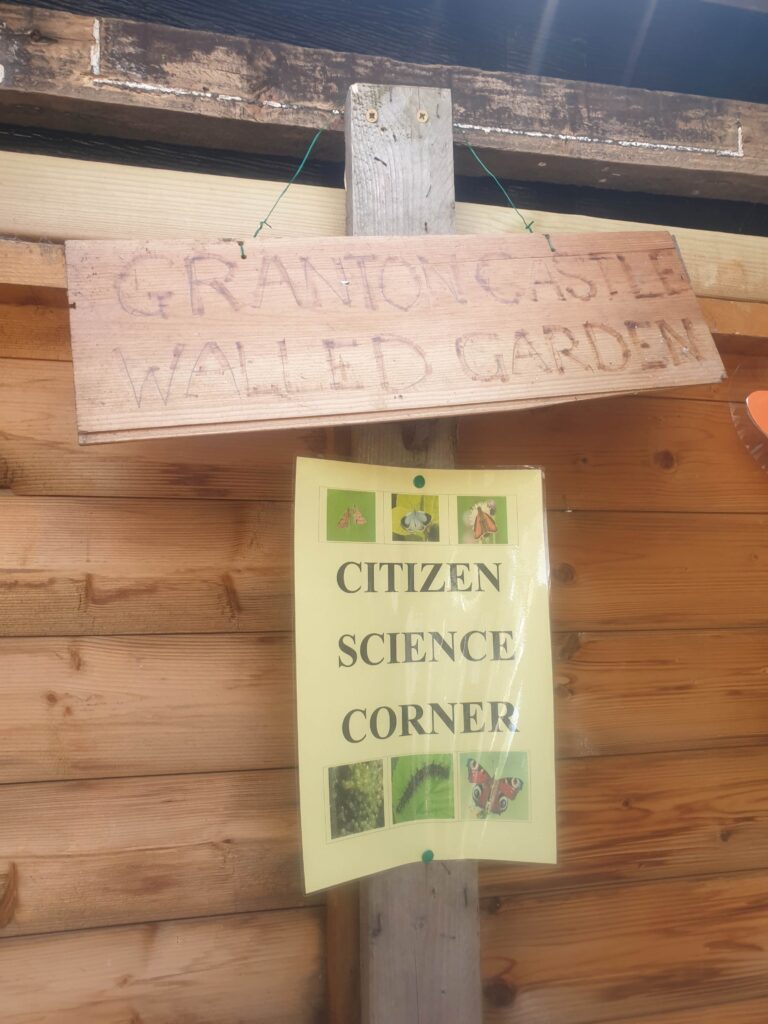
Since then, the project has begun to take shape. We have launched it on social media, created a small resource area within the garden, and started organising a series of walks and workshops. These will be led by one of our volunteers, a trained ecologist who has recently joined the Walled Garden community.
We are also beginning to build local partnerships, working with the National Museum Collection Centre in Granton, Lauriston Farm, and Granton Community Gardeners. Together, we hope to create a network of observation and shared learning.
Looking ahead, we are planning events for Insect Week in June, as well as activities linked to the Big Butterfly Count in July and August.
This is only the beginning. We see the citizen science programme as something that can grow gradually and become self-sustaining over time. There are no strict guidelines, just an open invitation to take part.
You don’t need any formal scientific training to get involved. Citizen science is built on curiosity, observation, and a willingness to notice the world around us. Everyone’s contribution matters, and every observation adds to a larger picture.
It’s also a simple and rewarding way to spend time in the garden. To sit and to watch what’s moving among the plants. To bring a picnic and share what you see.
We hope you’ll join us. Edinburgh’s fluttering friends need all the help they can get.
Gillean Paterson